
Table of Contents
You found a moving company online. They quoted you $2,000 less than everyone else for a Montreal to Toronto move. You booked them. On moving day the truck left your driveway with everything you own. Three days later you get a call. The truck was stopped at a weigh station outside Kingston. The driver’s hours were over the legal limit. The ELD was not working. The officer pulled the truck off the road. Your furniture, your kids’ beds, your wife’s grandmother’s china cabinet are sitting in an impound lot and the company is not returning your calls.
This is not a hypothetical. This happens. And the reason it happens is that most Canadians hiring a long-distance mover have never heard of ELD compliance, so they never ask about it. This article is the one we wish every consumer would read before putting their belongings on a stranger’s truck.
What Is an ELD and Why Should You Care?
ELD stands for Electronic Logging Device. It is a piece of equipment plugged into a commercial truck’s engine that automatically tracks how long the driver has been driving. There is a legal limit on how many hours a commercial driver can spend behind the wheel per day and per week. The ELD makes sure the driver does not exceed that limit.
As of January 2023, Transport Canada requires every federally regulated commercial carrier operating across provincial lines to have an ELD installed and active. Paper logs are no longer acceptable for most long-distance moves. If your mover is crossing provincial borders and does not have an ELD, they are operating illegally.
Why It Exists
The ELD mandate was introduced to reduce accidents caused by driver fatigue. A tired truck driver at 3 AM on Highway 401 with 30,000 pounds of household goods behind them is a public safety issue. The ELD enforces rest breaks so drivers cannot push past safe limits.
Why You Should Care
Because when a non-compliant truck is pulled over, the officer can order the truck off the road. Your belongings stay on that truck until the company fixes the problem. That can take hours, days, or weeks, depending on what is wrong. And in some cases, the belongings are impounded and the customer spends months trying to get them back.
What Happens If Your Mover Is Not ELD Compliant
Here are the real consequences, in order of severity, of hiring a mover that is not compliant with Canadian ELD rules.
Your Truck Gets Pulled Over at a Weigh Station
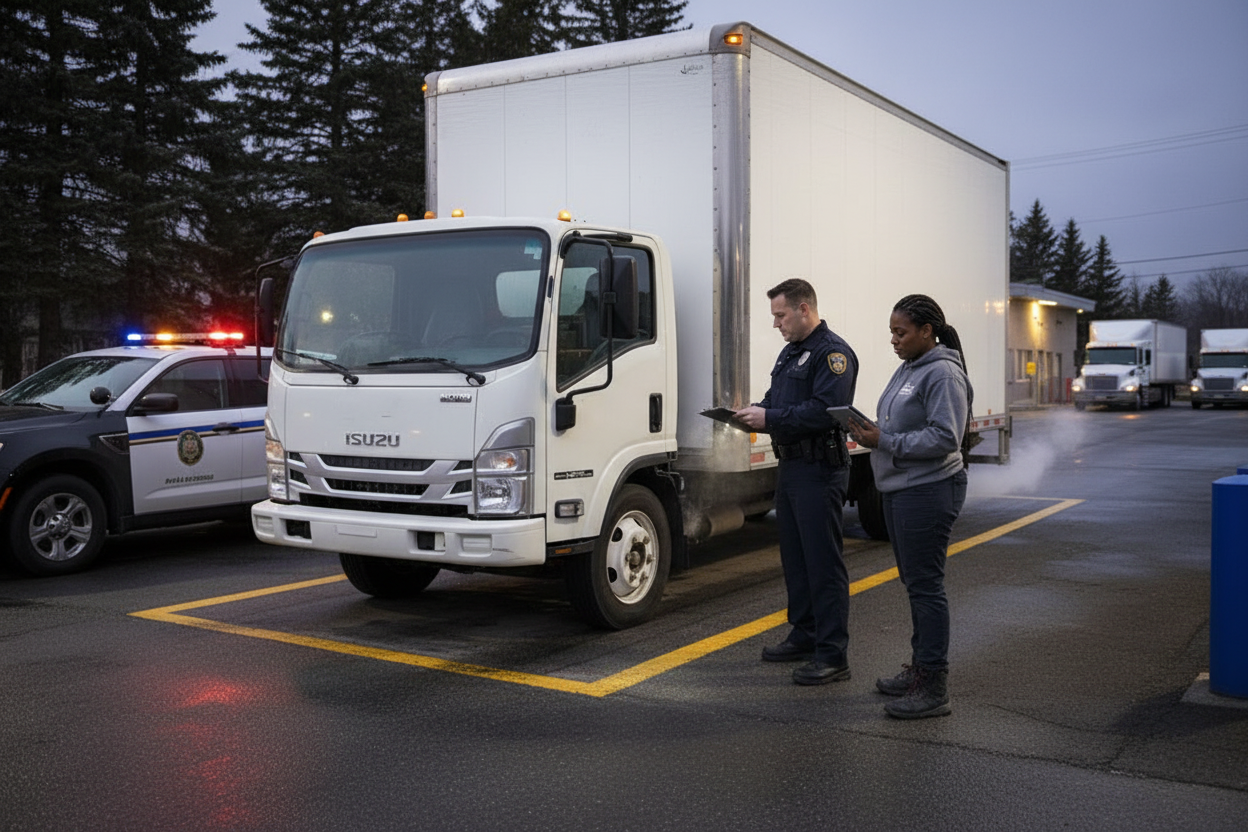
Commercial trucks pass through weigh stations across Canada. At each one, an officer can check the driver’s ELD. If the ELD is missing, tampered with, or showing violations, the truck is pulled off the road immediately. Your belongings are stuck until the issue is resolved. This is the best case scenario.
The Driver Is Ordered to Stop Driving
If the driver has exceeded their legal hours of service, they are ordered to take a mandatory rest period, typically 10 hours minimum. During that time, your truck sits. The driver has to find a legal place to park. If the truck is on a narrow shoulder or in a restricted area, it gets towed at the company’s expense, but the delay is yours.
The Company Gets Fined and Your Move Stops
Transport Canada fines for ELD violations can be significant. Smaller fly-by-night operators often cannot afford to pay and continue operating. The company may delay your delivery while they dispute the fine, and in extreme cases, they may go out of business with your belongings still on their truck.
Your Belongings Are Impounded
In the worst cases, Transport Canada or provincial authorities can impound the entire truck including its cargo. Getting your belongings back from an impound lot requires proof of ownership, paperwork, transportation to the impound lot, and payment of storage fees. This process can take weeks or months. Some people never recover their full shipment.
The Impoundment Scenario (Real-World Walk-Through)
Here is what actually happens step by step if the worst occurs.
- Day 1: Your truck leaves Montreal with everything you own. The driver has been using paper logs illegally or an uncertified ELD device. Everything seems fine. You are told delivery will be in 2-3 days.
- Day 2 morning: The truck stops at a weigh station in Ontario. The inspector requests the ELD data. The device is missing, tampered with, or the driver’s logs show violations. The officer orders the truck off the road.
- Day 2 afternoon: You get a call from the moving company. Vague explanation. “Minor delay.” They do not tell you the truck has been ordered off the road.
- Day 3: No delivery. You call the company. No answer. You call again. Voicemail.
- Day 4-7: You finally get the story. The truck has been impounded because the company cannot produce valid compliance documentation. Your belongings are locked in an impound lot.
- Week 2-4: You have to hire a lawyer or work with a consumer protection agency to retrieve your items. You need to prove ownership through photos, receipts, and sworn statements. You need to pay the impound fees yourself and recover them from the company, which may be bankrupt by this point.
- Week 6-12: If you are lucky, you recover your belongings in damaged condition. If you are unlucky, the company disappears and some items are never recovered.
The saddest part: Every single one of these scenarios can be prevented by asking three questions before you sign the contract. We list them below.
The 3 Questions to Ask Any Long Distance Mover
Before you put your belongings on any long-distance moving truck, ask the company these three questions. If they cannot answer all three quickly and confidently, do not hire them.
Question 1: Do Your Trucks Have Certified ELDs?
A good mover answers yes immediately and can tell you the name of the certified device provider (for example, Geotab or Omnitracs). They might mention Transport Canada’s certified device list. If the company hesitates, does not know what an ELD is, or says they use paper logs, do not hire them for a long-distance move.
Question 2: What Is Your CTQ Safety Rating?
In Quebec, every commercial carrier has a safety rating from the Commission des Transports du Quebec. This rating is based on their actual record: tickets, driving infractions, truck condition, and compliance. AKA Moving’s rating is almost perfect. A fly-by-night operator either has a bad rating or does not have one at all.
Question 3: When Was Your Last Truck Inspection?
Commercial trucks in Canada undergo regular safety inspections. A reputable mover can tell you the date of their last inspection and show you the certificate. If they cannot, or if they get defensive, that is a problem.
These three questions take 30 seconds to ask. A reputable moving company answers all three in under a minute. A scam operator cannot.
AKA Moving’s Compliance Record
Since we are telling you to ask every mover these questions, we owe you our own answers.
ELD Status
Every AKA Moving long-distance truck is equipped with a certified Electronic Logging Device from Transport Canada’s approved list. Our ELDs connect to the SAAQ for provincial compliance. We do not use paper logs. We do not use uncertified devices. We are fully compliant with the Canadian ELD mandate as of January 2023.
CTQ Safety Rating
Our Commission des Transports du Quebec safety rating is near perfect. We have minimal deductions and no serious violations. You can request our carrier number and verify our record yourself.
Truck Inspections
Our fleet undergoes regular safety inspections on schedule. All inspection certificates are current. Our trucks pass weigh stations and roadside checks without incident.
What This Costs You
Compliance costs money. ELD devices cost money. Safety inspections cost money. Hiring drivers who follow the rules costs more than hiring drivers who do not. This is part of why legitimate long-distance movers cost more than the cheapest quote you can find.
But the cost of non-compliance, if it happens to you, is losing your belongings. Most people, when they understand what is at stake, are willing to pay a bit more for a mover who actually shows up with your stuff.
Cross-Border Moves: Why Compliance Matters Even More
If you are moving from Montreal to the United States, compliance gets more complicated. The US has its own ELD rules enforced by the Federal Motor Carrier Safety Administration (FMCSA). Your mover needs to be compliant in BOTH countries.
A Canadian moving company without US operating authority cannot legally cross the border with your belongings. A non-compliant ELD in the US means the truck is pulled over and your belongings sit on the US side until the issue is resolved. Clearing this up from another country is a nightmare.
Cross-border moves require dual compliance. AKA Moving has the authority and the ELD certification to operate in both Canada and the United States. Our trucks cross the border regularly. Read our full long-distance moving services page for more on cross-border operations.
Frequently Asked Questions
What happens to my belongings if the moving truck gets pulled over for ELD violations?
Your belongings stay on the truck until the issue is resolved. In the best case, the truck is ordered off the road for a mandatory rest period (typically 10+ hours). In the worst case, the truck and its cargo are impounded, and retrieving your belongings requires proof of ownership, paperwork, and paying storage fees. Recovery can take weeks to months, and in extreme cases, items are never recovered.
How can I verify that a long-distance moving company is ELD compliant?
Ask them three questions: (1) Do your trucks have certified ELDs? They should be able to name the provider. (2) What is your CTQ safety rating? In Quebec, every carrier has one. (3) When was your last truck inspection? A reputable mover answers all three in under a minute. If they cannot, hire someone else.
What penalties does a non-compliant moving company face?
Transport Canada fines for ELD violations can be significant and escalate with repeat offenses. In serious cases, the carrier can have their operating authority suspended or revoked, meaning they cannot legally continue operating. For the customer, the consequence is delayed or impounded belongings, which is why hiring a compliant mover matters.
Is AKA Moving ELD compliant for cross-border moves to the US?
Yes. AKA Moving operates with dual compliance, valid in both Canada and the United States. Our trucks are equipped with ELDs certified for use in both countries, and our operating authority covers cross-border moves. We regularly move clients to Boston, NYC, Burlington, Plattsburgh, and beyond without compliance issues at the border.
Ask us the three questions. Call AKA Moving at (514) 915-3967. We will answer every compliance question in under 30 seconds. For more on our long-distance moving services and safety record, visit our long-distance moving page. If you want the full picture on choosing a safe mover, also read our guide to cheap long distance moving.